

Policy
Finance Ministry weighs uniform MOOWR rules for battery storage duty deferment
Customs offices in different states have read the same warehousing law differently, and the Centre is now looking at whether a rule change, rather than a clarification, can settle the question.
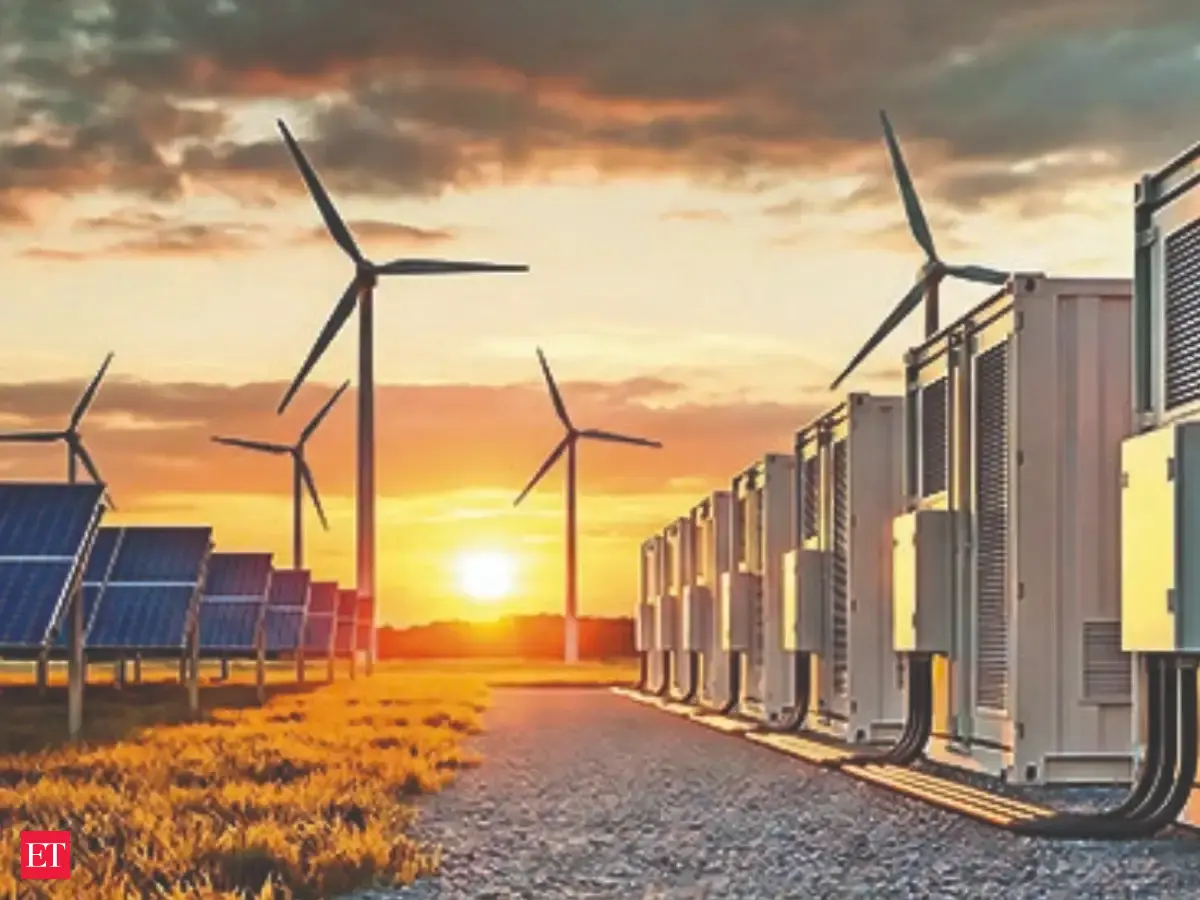
The finance ministry is considering a uniform national approach that would let battery energy storage projects defer customs duty and GST on imported equipment under the Manufacture and Other Operations in Warehouse Regulations (MOOWR), 2019, according to people familiar with the discussions. The move follows complaints from developers that customs offices in different states are deciding identical cases differently.
The disagreement turns on a narrow legal question: whether battery storage counts as an "other operation" under Section 65 of the Customs Act, 1962, which allows manufacturing and other operations inside a bonded warehouse. Some customs offices have accepted that reading and allowed deferment on imported battery systems. Others have rejected applications or left them pending for months. For developers, the gap between the two outcomes is a potential extra tax cost of nearly 31% of import value.
Officials indicated that a simple clarification may not be enough. The Central Board of Indirect Taxes and Customs (CBIC) is reviewing the full list of permitted operations, and the fix may involve changing the definition or the list itself so the provision cannot be read two ways. A senior official said the government is examining industry concerns and wants the law applied uniformly across jurisdictions without ambiguity.
The mechanism matters because of how the scheme works. MOOWR lets companies keep imported equipment in approved bonded warehouses and pay customs duty and GST only when the goods are cleared. For capital-intensive battery projects, that pushes a large tax outgo later and lowers the upfront funding needed. Because electricity supply is exempt from GST, developers generally cannot claim input tax credit on the GST paid on imports, so the tax becomes a straight addition to project costs.
Tax experts say the larger worry lies in how projects were bid. Saurabh Agarwal, tax partner at EY India, noted that developers priced their bids on the law as it stands, often without escalation clauses. A refusal of deferment adds roughly 31% in upfront duty and IGST, which could turn into a change-in-law claim that power distribution companies ultimately bear. He argued that handling pending applications uniformly would remove that uncertainty and fit the government's wider objectives for storage.
The timing sharpens the pressure. Landed battery cell costs in India have reportedly risen from about $42 per kilowatt-hour to $55 in 2026, driven by higher lithium, copper and aluminium prices and changes in China's export incentives. Several developers who won projects in competitive bidding in 2025 now face equipment bills above their estimates, and many contracts leave little room to revise tariffs. An unfavourable customs ruling would land on already thin margins.
No decision has been announced, and the final form of any change, whether a notification, an amendment to the list or a board instruction, remains open. What the review shows is that tax administration, not just technology or price, is shaping how quickly India's storage build-out proceeds. Source: Economic Times.