

Environment
Kerala SMA drug row: Parents spot 'clinical trial' label on generic medicine
A switch from Roche's Evrysdi to the cheaper Natsmart at a Thiruvananthapuram hospital has left parents of children with spinal muscular atrophy asking whether they were told what changed.
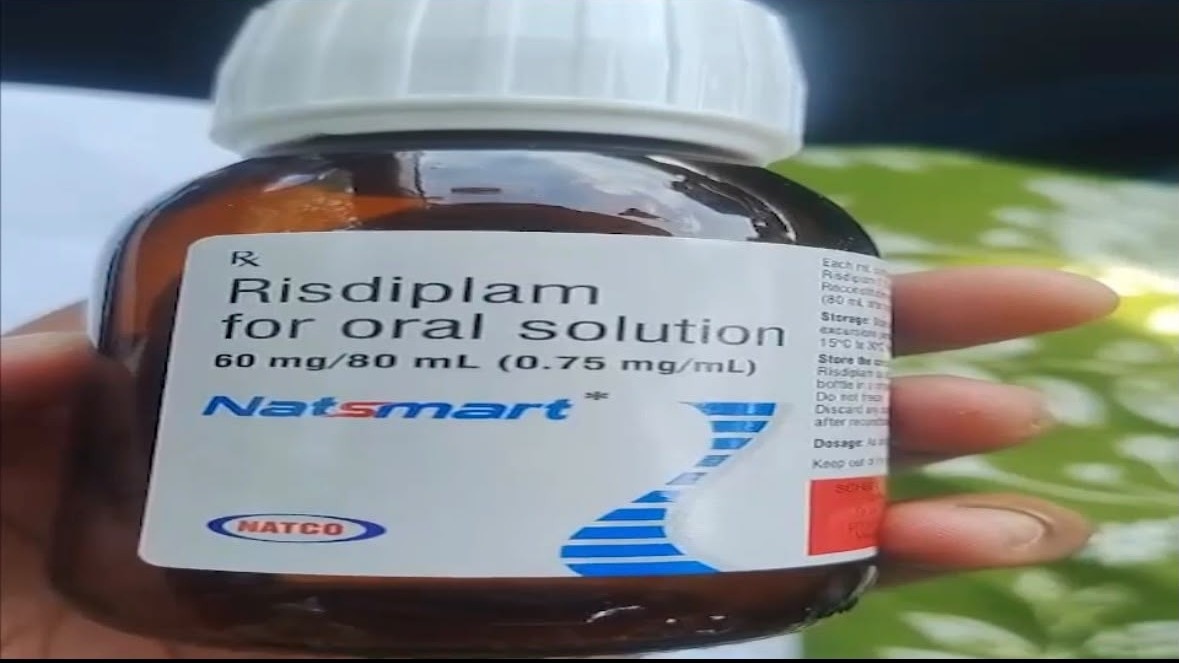
Parents of children with spinal muscular atrophy (SMA) in Kerala are worried after a government hospital reportedly handed out generic medicine whose packaging carried the words "Physician Sample" and "For Clinical Trials Only". The medicine was given out this week at Sree Avittom Thirunal (SAT) Hospital in Thiruvananthapuram, and it has replaced the drug their children had been taking.
Until now, eligible children in the state's free programme received Evrysdi, made by Swiss company Roche. Its active ingredient is risdiplam. This week the state moved to Natsmart, a cheaper Indian generic version of the same molecule. Parents say the label made them fear their children were being given an experimental drug.
The row has put three questions in front of the government. Has the generic been properly approved for this use? What evidence shows it works as well as the original, a test known as bioequivalence? And were parents clearly told about the change and asked for their consent? The source report does not say how the government has answered these questions. Opposition leader and former chief minister Pinarayi Vijayan raised the issue on October 20.
The stakes are high because SMA is a rare genetic condition that steadily weakens muscles and can be fatal in its severe forms. Risdiplam helps the body make more of the survival motor neuron (SMN) protein, which people with SMA lack. It is not a cure, but it can slow the disease, and it works best when started early.
Kerala has been the only Indian state offering free SMA treatment since 2022. The effort grew into the Kerala United Against Rare Diseases (KARE) programme in 2023, covering children under 12. Around 200 patients are believed to benefit. The imported drug could cost about Rs 72 lakh a year for the first two years and about Rs 56 lakh a year after that, which is far beyond most families' means.
The generic changes that sums sharply. Last year the Delhi High Court allowed Hyderabad-based Natco Pharma to make a generic risdiplam. Natco then launched Natsmart at Rs 15,900 a bottle, about 97% below the original's price of up to Rs 6.2 lakh a bottle. For a state paying for treatment out of public money, that is a big saving.
So the dispute is not about whether cheaper medicine is a good idea. It is about process and trust. When children with a serious illness are moved to a different product, families expect clear paperwork, plain explanations and labels that match what they have been told. Until that is cleared up, the cost savings may be overshadowed by doubts.